How to Unclog a Drain: 7 Methods That Actually Work
A sink that drains slowly, gurgles, or refuses to drain at all is one of the most common household plumbing problems. The good news is that most clogs sit close to the drain opening and can be cleared in minutes with things you already own. Learning how to unclog a drain yourself saves the $150 to $300 a plumber charges for a routine visit, and it is easier than most people expect.
This guide covers seven methods, ordered from the simplest to the most thorough. Start at the top and stop as soon as the water runs freely again. These methods are for sink drains in kitchens and bathrooms.
What Causes a Drain to Clog?
Clogs form when material sticks to the inside of the pipe and builds up layer by layer. In a kitchen sink, the main culprits are cooking grease, oil, and food scraps. Grease goes down as a liquid but hardens on the pipe walls as it cools. In a bathroom sink, clogs are usually a mix of hair, soap scum, and toothpaste that mats together just below the stopper.
Knowing what caused the clog helps you pick the right method: grease responds well to heat and degreasers, while hair usually has to be pulled out physically.
Safety First: What Not to Do
Skip the harsh chemical drain cleaners. They rarely clear a complete blockage, they can damage older pipes and the seals in your drain assembly, and they leave a sink full of caustic liquid that makes every later step more dangerous. Never mix cleaning products, and never plunge a drain that has chemical cleaner sitting in it, because splashing can burn skin and eyes. Every method below is mechanical or uses ordinary household ingredients, and together they clear the overwhelming majority of sink clogs.
Method 1: Boiling Water
For grease clogs in a kitchen sink, plain boiling water is often enough.
- Boil a kettle or large pot of water.
- Pour it slowly down the drain in two or three stages, giving the hot water a few seconds to work between pours.
- Run the hot tap for a minute to check the flow.
Repeat once if the drain improves but is still slow. Do not use boiling water on PVC pipes in very old plumbing if you are unsure of the pipe material; very hot tap water is a safer choice there.
Method 2: Baking Soda and Vinegar
This classic combination loosens soap scum and light buildup, and it freshens a smelly drain at the same time.
- Pour half a cup of baking soda directly into the drain.
- Follow it with half a cup of white vinegar.
- Cover the drain with a plug or cloth and let it fizz for 15 to 30 minutes.
- Flush with a kettle of hot water.
This method works best on partial clogs and regular maintenance rather than a complete blockage.
Method 3: The Plunger
A plunger clears clogs by forcing pressure and suction through the pipe. Use a flat-bottomed cup plunger for sinks, not the flanged type made for toilets.
- Remove the sink stopper if it lifts out.
- Fill the sink with enough water to cover the plunger’s cup.
- Block the overflow opening with a wet cloth so pressure is not lost.
- Place the cup firmly over the drain and push down and pull up vigorously 15 to 20 times, keeping the seal.
- Pull the plunger away and see if the water rushes out. Repeat two or three times if needed.
On a double kitchen sink, plug the second drain with a cloth so the pressure goes into the clog instead of up the other side.
Method 4: Clean the Stopper and Drain Opening
In bathroom sinks, the clog often sits right at the top. Many stoppers can be lifted out or unscrewed from underneath the sink. Pull the stopper out and you will usually find a mat of hair and soap scum wrapped around it. Clean it off, reach into the drain opening with a plastic hair-removal tool or a bent wire to pull out anything within reach, then run hot water to test.
Method 5: Use a Drain Snake
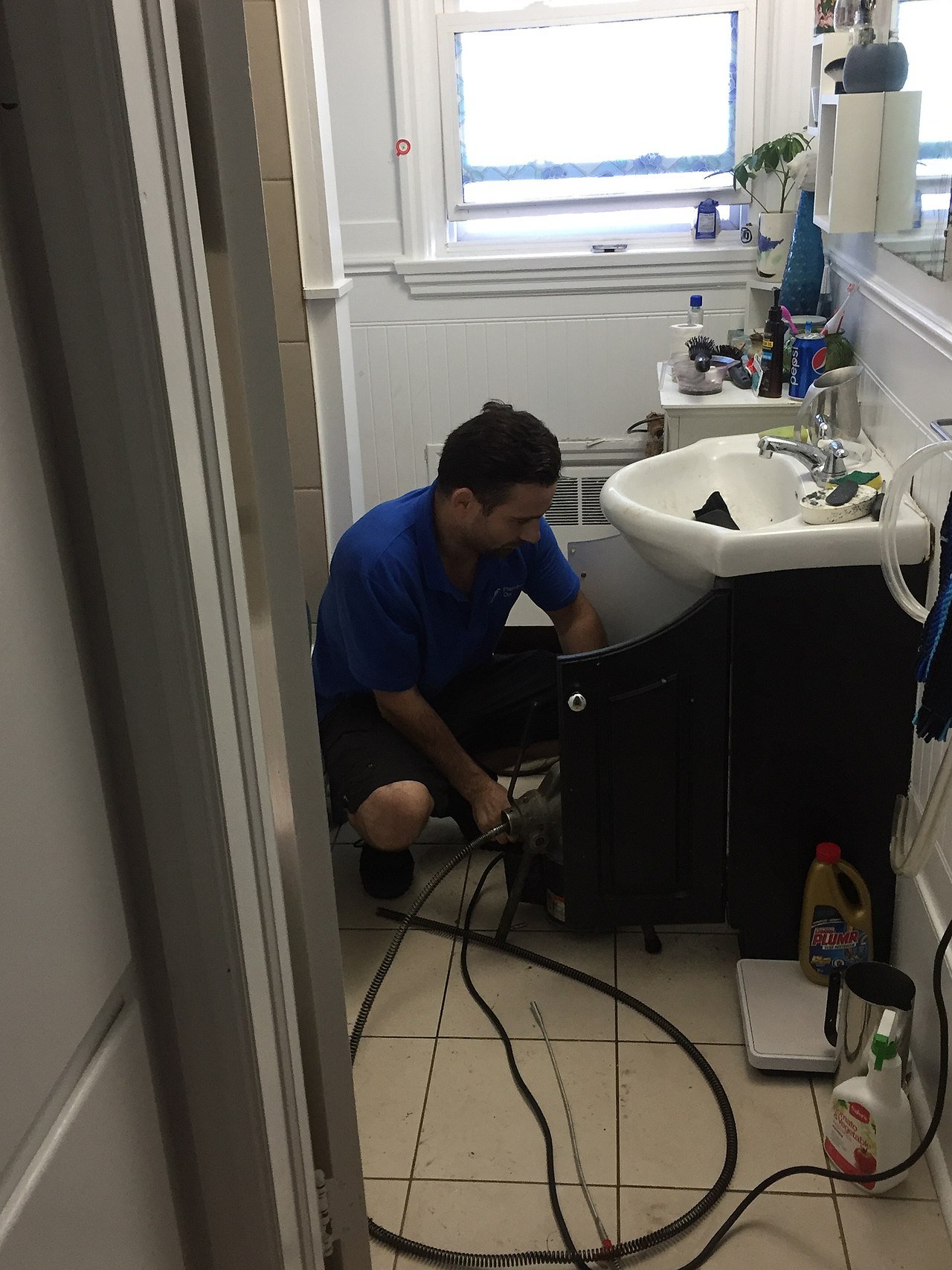
A drain snake (also called a hand auger or a plastic zip tool) physically grabs or breaks up clogs that sit deeper in the pipe.
- Feed the snake slowly into the drain until you feel resistance.
- Crank or push gently while rotating, so the tip works into the clog.
- Pull the snake back out slowly. Hair and debris usually come out with it.
- Run hot water for a minute to flush the pipe and confirm the drain is clear.
Work gently. Forcing a snake can scratch pipe walls or push a soft clog deeper, so patience clears more clogs than strength does.
Method 6: Remove and Clean the P-Trap
If the clog survives the methods above, it is probably sitting in the P-trap, the curved pipe directly under the sink. Cleaning it out sounds intimidating but is a simple, no-special-tools job.
- Place a bucket under the trap to catch the water that will spill out.
- Unscrew the two large slip-joint nuts by hand, or with pliers if they are tight.
- Slide the trap off and empty it into the bucket.
- Scrub out the trap, rinse it, and check the short pipe going into the wall for any remaining blockage you can reach.
- Reassemble everything, hand-tighten the nuts, then run water and watch carefully for leaks. Tighten any nut that weeps by a quarter turn.
Most P-traps come apart and go back together in about ten minutes, and this method gives you direct access to the exact spot where sink clogs most often form.
Method 7: Enzyme Drain Cleaner
For slow drains rather than full blockages, an enzyme-based drain cleaner is a safe overnight option. These products use bacteria and enzymes to digest organic buildup such as grease, hair, and soap, and unlike caustic chemicals they are safe for pipes and septic systems. Pour it in at night, let it work for at least six hours without running water, and flush with warm water in the morning. Enzyme cleaners are too slow for a completely stopped drain, but they are excellent for keeping a cleared drain clear.
How to Prevent Future Clogs
Once the drain runs freely, a few habits keep it that way:
- Pour cooking grease into a can or jar and throw it in the trash, never down the drain
- Use a mesh strainer in kitchen and bathroom sinks to catch food and hair
- Run hot water for 30 seconds after each use of the kitchen sink
- Flush bathroom drains monthly with baking soda, vinegar, and hot water
- Keep coffee grounds, rice, and pasta out of the sink; they swell and stick inside pipes
When to Call a Plumber
Call a professional if:
- Several drains in the house are slow or backing up at the same time, which points to a main line problem
- You hear gurgling from other fixtures when one drain empties
- The clog returns within a few days of clearing it
- Water backs up with a sewage smell
- None of the methods above make any difference
These signs suggest the blockage is deep in the system or in the main sewer line, beyond the reach of household tools.
Frequently Asked Questions
What is the fastest way to unclog a drain?
A plunger is usually the fastest fix for a sink clog, taking only a few minutes. If plunging fails, a drain snake or cleaning the P-trap almost always clears what is left.
Does baking soda and vinegar really unclog a drain?
It works on light buildup, soap scum, and slow drains, and it is great for odors. For a complete blockage caused by hair or hardened grease, a plunger, snake, or P-trap cleaning is more effective.
Why does my drain keep clogging?
Repeat clogs usually mean buildup on the pipe walls that was never fully removed, or habits that keep feeding the clog, such as pouring grease down the kitchen sink. A thorough P-trap cleaning plus a strainer solves most repeat problems.
Are chemical drain cleaners bad for pipes?
They can be. Caustic cleaners generate heat and can soften PVC joints and corrode older metal pipes, especially with repeated use. They also make later repairs hazardous because the liquid sitting in the sink is corrosive.
How much does a plumber charge to unclog a drain?
A routine drain-clearing visit typically costs between $150 and $300. Main line blockages cost more, which is why it is worth trying the methods above first for a single slow sink.